Thursday, 25 December 2008

The Day the Earth Stood Still


I would venture a guess that any film-watching person would regard Keanu Reeves’ acting skills as wooden at best, blank and emotionless at worst. For those people (of which I sometimes count myself a member) ‘The Day the Earth Stood Still’ is a testament to the casting choice of director Scott Derrickson – he managed to gift Keanu with the role he was born to play, and as such the movie is that much better for its blank lead. However, the movie as a whole suffers from some weak writing and some incredibly clichéd characters.

Dr. Helen Benson (Jennifer Connolly) is called alongside other scientists to survey a mysterious object entering the earth’s orbit. The object settles in Central Park, and a figure enters from within – under interrogation, Klaatu (Reeves) reveals that he is an alien emissary, sent by a group of powerful extra-terrestrial civilisations to warn the human race that our treatment of the planet has warranted action, potentially hostile and apocalyptic.

Reeves, often thought of as having the emotional range of a piece of 2 by 4, finds what could be described as a niche role to match his strange, other-worldly visage. As an alien without emotion, he conveys a sense of unease and distrust through his vacant expressions, and as such this is probably one of his best performances – the fact that he barely seems to blink throughout the film is incredibly unsettling. Jennifer Connolly does what she needs to, attempting but failing to balance the multiplicity of trying to be a strong heroine, sympathetic mother and put-upon widow as well as an ally to an alien. What detracts from her performance is her disadvantage in being in too few scenes without weeping to show off her weirdly huge eyes – we get it, she’s sad, but why drum it home? After a very short amount of time she infuriated me, and I actually wished that she was not the main focus of the movie alongside Reeves.

Kathy Bates plays a Defence Secretary who is decidedly ambiguous – she cannot seem to decide whether to go with her hunches or follow orders, and as such the actress has a pretty nothing role to play. An actress who is best at playing disturbing, angry characters is somewhat nullified here, in a stock politician role, and the only thing that makes it a little different is that she’s a woman – this is the kind of role someone like Ed Harris would play. Will Smith’s son, Jaden, is actually pretty damn convincing as the precocious step-kid of Connolly’s character, a damaged child who cannot process death but is faced with it throughout the film’s length. John Hamm and Kyle Chandler play sympathetic and antagonistic sides of the government’s response to Klaatu’s arrival, and each do what they need to – their performances don’t give them much more of an option, and this is a shame, as they’re ciphers, nothing more than extreme examples of each side of the debate. John Cleese appears for about four minutes as a wise and important scientist – really, really weird for any of us brought up on ‘Fawlty Towers’ and ‘Monty Python’, as Cleese is not known for his serious roles. The problem with the supporting cast is that they are not as interesting nor as bizarrely compelling to watch as Reeves is – this is perhaps deliberate, with him being an alien and all, but at the same time you’d think that the characters would be more fleshed out as to be able to compare with Klaatu – unfortunately this is not the case!

Scott Derrickson, through his direction, stakes a claim to be the breakout director of 2008 here; he manages to take a major-budget sci-fi action film with a brain and make it work, a hard task – but Derrickson seems to have ably coped with it, presenting a film that manages to balance both insane action with thoughtful ideas. His concept that alien civilisations want us to stop harming the earth (or face the consequences) is eerily apt for the current position of global warming, and the film does not often find itself drifting into cheesy or strained scenes – but the writing is poor, particularly in regard to the characters, who are crudely sketched caricatures of atypical judgements and opinions. Visually, the movie succeeds beyond expectations. The special effects on show are stupendously good – from the orb that swirls with energy that signals the alien arrival, through to the sentinel sent to guard it (and latterly this object’s amazing defence mechanism), the film is a sumptuous sight to behold if nothing else.

The film is great – its message is firm, its effects work strong and convincing, and many of the main roles well-cast. However, the characters are pushed to one side, put out of balance by Reeves and Connolly, and whilst Reeves is the centre of the film here, Connolly is not strong enough to grip as much as him, as well as the other characters. To poorly quote the movie itself: With Reeves offscreen, the film suffers. With Reeves onscreen, the film survives.

8/10

Monday, 8 December 2008

300


Vibrant, blood-spurting anarchy all the way, “300” takes film-making to a highly-stylized and brutal plateau.

The king of Sparta, Leonidas (Butler) decides to defend his (and in his mind, Greece’s) freedom against the oncoming armies of Persia, and taking 300 of his best warriors, he ventures toward certain death with only carnage on his mind.

Gerard Butler should really be able to pick and choose leading roles with this performance; his Leonidas is cocky, laconic (ironic considering the origins of the word in the region of Greece in which he lived) and uncompromising in his decisions and actions against the invaders. Lena Headey (Sarah Connor Chronicles) plays Gorgo, Leonida’s queen, and in taking the one speaking role for women in the film, Headey needs and manages to convey a strong-willed woman who takes what she wants in a time when women were suitably exploited. The British actress manages to present herself as someone not to be messed with: a dominant woman in a time of dominant men!
David Wenham (LOTR’s Faramir) is the film’s narrator and Spartan warrior, and he adds gravitas and humour to the proceedings. Rodrigo Santoro plays the Persian ruler Xerxes, and has to put up with the unlucky situation of being covered in jewellery as well as having his voice ridiculously dubbed, but the actor manages to convey evil sufficiently well here. Dominic West plays the councillor Theron, whose own aims are strangely in line with those of the Persian invaders, and the actor plays the pantomime villain role quite convincingly.

Zack Snyder, with only “Dawn of the Dead” to his name, fashioned himself a place within the higher echelons of today’s directors with his work on “300”. Stylishly and convincingly conveying the real and the cartoony, the film is evidence as to how Snyder has managed to get the “Watchmen” gig from his success here, and the director’s hold on both action and drama exceeds many at this point in time. His adequate balance of violence with stunning visuals holds him above many of his contemporaries, and I’m excited to see him tackle “Watchmen”.

Taking the laconic idiom at its origins, the film presents real-life quotes spoken by Leonidas and incorporates them in. These famous sayings, alongside the expository and inspirational dialogue on display, combine well to give the film a sense of both history and humour. In the vein of films such as “Troy”, "300"’s soundtrack is a mixture of wailing and orchestral magic, but Tyler Bates incorporates the bad-assery of the electric guitar into the soundtrack to give it that extra weight, and the already uncompromising masculinity of the movie is emboldened by the (in places) almost heavy metal backing!

The film is, for want of a better word, visually stunning. With green-screen technology, and a film based upon a highly-stylized graphic novel, Snyder gives the events of the movie a golden, tarnished sheen, CGI visuals and actors alike bathed in glorious, burnt colours. With this alongside the fantastic fight scenes, the film has changed the way that action (and indeed, vistas and landscapes) can be visualised on film.

The film is brash, totally ridiculous at points and squeamish at others. But visually, tonally and in a narrative sense, it’s excellent; imperious and bone-crunching.
9/10

Monday, 1 December 2008

Doomsday


Neil Marshall follows up “The Descent” with a schizophrenic action film not sure what it should be, yet still a rip-roaring, mad experience nonetheless.

Britain, 2034, and a virus known as Reaper has decimated Scotland, which is segregated once more by Hadrian’s Wall. Major Eden Sinclair (Mitra), a tough-as-nails commando, is told that she has been picked to venture into the quarantined zone for a cure, as the virus begins to wreak havoc in central London. Taking a team with her, she goes in search of Kane (McDowell), a doctor who may have found a cure.

Rhona Mitra is one attractive lady, but her acting isn’t good enough throughout to be totally without question. The supporting cast is filled with British stars, and any film with Bob Hoskins is gonna have some promise! She plays Eden, the bad-ass leader of the group sent into Scotland to retrieve a cure. Part Mad Max, part Snake Plissken, she kicks ass and quips with a stiff British accent – making it a totally bizarre performance. The problem here is that her attractiveness will allow most men to just ignore her acting, because she’s a strong, dominating female lead, and the head of the army unit – a true film heroine you would not want to mess with.

This film probably has one of the most eclectic supporting male casts ever; Bob Hoskins to Adrian Lester, Malcolm McDowell to Alexander Siddig – there’s some underrated and excellent British actors here. And being as it’s a film set in London or Scotland, it’s befitting and refreshing to see that they’re indeed all British. Hoskins is Mitra’s commander, one of those ‘world-weary’ cops, but it’s Bob Hoskins – he makes the guy that much more grouchy. Malcolm McDowell exudes a Kurtz-like role as Kane, a doctor lost in Scotland and gone rogue – though I cannot watch him without thinking of Linderman in “Heroes”. Siddig plays the slippery Prime Minister, and David O’Hara is corruption personified as Canaris, the real power behind the PM. Adrian Lester plays the army support to Mitra’s Sinclair, and he continues to show that he can act in pretty much anything (from the BBC’s “Hustle” to “The Day After Tomorrow”). Final mention has to go to Craig Conway’s Sol, the crazy leader of the survivors in Scotland – you will not forget his incredibly bizarre performance here.

Myanna Buring plays Cally, a survivor who assists the army team going in, and as the second woman in a film with such an independent character as Eden Sinclair, her ‘damsel in distress’ performance seems a little diminished really. Lee-Ann Liebenberg plays Viper, the crazily tatooed girlfriend of Sol, and with what little time she has (and no speaking part) she conveys a summation of the many co-stars and extras here – they’re supposed to be rabid, disassociated people, and acting as bizarrely as this seems to fit that perfectly.

Marshall steers away from all-out horror to create an actioner that is miles better than other films in its league; the homages especially set it aside. It’s pretty apparent here that Marshall has been given free reign to indulge his vision, and he creates a taut and bombastic thriller that, if made by Michael Bay, would probably be far more popular and well-known. As it is, Marshall can present tension, drama and gore concurrently, and it’s interesting to think what he could do with a big job on a Hollywood pic. In paying homage to such cult classics as “Escape from New York”, Marshall inputs little character quirks such as Sinclair’s propensity for cigarettes, and whilst some of these are carried off well, other lines of dialogue are pretty terrible (most of what Sol says in fact, particularly if you can understand him). The soundtrack, by Tyler Bates (300) is epic, totally reflective of the vistas and set-pieces that are presented on-screen throughout. The use of songs such as “Two Tribes” amongst others also sets the film across from contemporaries, as the atmosphere changes with the addition of such famous pieces, and they somehow fit perfectly with what’s being shown!

From the visions of an abandoned Glasgow to the reinforced, imperious Hadrian’s Wall boundary, Marshall employs impressive CG and landscapes, using the wildernesses of Scotland and South Africa to convey the wild nature of the segregated country. The gore effects are squeamishly good, particularly in regard to the virus sufferers, and the stunts are Bay-like in their execution; when a Bentley goes flying through a bus, or an armoured vehicle ploughs through a wall and explodes, you see the same propensity for realistic destruction that you’ve seen in “Bad Boys” or “Transformers”.

For a British-made, Scotland-based action movie, this film is surprisingly and seriously hard-core, and well worth seeing by any action junkie.

8/10

Sunday, 30 November 2008

The Descent


“The Descent” is a chilling, claustrophobic horror that actually delivers effective scares and plenty of gore. The easily scared should avoid this though!

Sarah (McDonald) is a year beyond the deaths of her husband and daughter, and as an adrenaline junkie, seeks to forget with a group of her friends by going caving in the Appalachians. However, the group’s leader Juno (Mendoza) harbours secrets and misdirection that lead them into trouble underground, and they’re certainly not the only living things in the caves...

The cast is all women, apart from a few exceptions I won’t elaborate on. The contingent of ladies make it not only different to most horror movies in its acting dynamics, but also in that there’s no male hero saving the day; a refreshing change that makes this film better. All six of the actresses are good in their own ways, but Shauna McDonald, who plays Sarah, gets the dramatic grounding in a back story and as a result we feel closer to her. Natalie Mendoza as the leader-figure Juno gets some fleshing out, but the rest are really just there to create the basis of a network of friends who enjoy caving. In that regard, it’s with Sarah and Juno that the audience is involved, and the two actresses are good enough to pull it off. Some special recognition must go to the stuntmen who portray the film’s antagonists. I don’t want to ruin the film in any way, but suffice to say that they create the right amount of menace and disgust to help the film achieve its position as a worthwhile horror experience.

The film itself is an indication that Neil Marshall is one of the more able film directors at this point in time. Merging the horrors of the dark with claustrophobia makes quite a potent mix of suspense, tension and gore that beats out many horror movies of the last few years. All the other combining factors create an atmosphere that would put anyone off caving for life, let alone going underground alone! Marshall, having directed “Dog Soldiers” before this, keeps his eye on horror with “The Descent”, and manages to break two cliches; that a horror director cannot successfully jump between horror narratives, and that an all female cast would not work in a horror movie. After watching this, it is apparent why he got given free reign to make the insane “Doomsday”.

The dialogue is pretty cheesy throughout, and there’s no vocal antagonist, so there’s no witty one-liners or anything. It’s reflecting real life I guess, and so the dialogue is limited to conversation, the group’s predicament and so on. The musical score is atmospheric and quite dark, with one theme recurring throughout that seems to be married to Sarah, the arguable protagonist of the narrative. In the most suspenseful scenes, the music is strongest, giving some effective scares. Re-creating a cave system in a film studio is blatantly no mean feat, but here it’s as if the filmmakers forced the women down into caves to film; it appears so alike to real cave systems! The claustrophobia that comes as a result is one reason why the film is so effective, and the primal horrors of the dark and confined spaces are brought back to life.

It will undoubtedly disturb many people, but at the same time horror fans will get a kick out of this brilliant film.
7/10

Monday, 17 November 2008

Unforgiven


This noirish, brutal Western truly leaves its mark upon the viewer. Filled with moral ambiguity, unjust actions and a decidedly flawed hero, Unforgiven once again shows the genius and proficiency of Clint Eastwood, and marks him aside not only as one of the best actors of all time, but now as one of the most accomplished directors.

William Munny (Eastwood) is an old, embittered man, disturbed by his deadly past, and confronted with the fact that he may have to face it again after encountering a sheriff with a psychotic streak (Hackman).

Clint Eastwood, Gene Hackman and Morgan Freeman. Just the names alone need only remind you that this film suffers no lack of acting prowess and power. Clint Eastwood once again proves that no-one else can play a gunslinger as well as he can. The fact that he can convince the viewer of his moral dilemma whilst pumping a whole bar of deputies full of lead is only one indication of his skill. To have Gene Hackman as your ‘villain’ (which, let’s face it, does not cut it in this story), and Morgan Freeman as support to the hero is enviable for any filmmaker, but Eastwood complements these two stars with many smaller actors who more than hold their ground; they stamp their own performances on screen. The writer Beauchamp represents the meek and creative man of the Old West; those who would never have fought or shot anyone. It was brilliant to watch someone show this type of person; not all men were fighters. Finally, to have Richard Harris appear for such a short time and still leave his mark lends the film yet more class.

You would believe “Unforgiven” was filmed in the real Old West, so fantastically shot and designed the movie is. Eastwood manages to seamlessly direct and act, and the film’s win for Best Picture shows through in the design, execution and portrayal of the narrative. Eastwood manages not only to get great performances from Harris and Hackman, but also himself, his character undeniably the focus but also the strongest performance. There is very little dialogue throughout the movie, but this only adds to the noirish film. Characters are not supposed to be fleshed out, and with the moral confusion embodied in every single person, whatever they do say cannot be trusted, lending the dialogue an interesting duality. There was very little music throughout the film, and this is due to the fact that it is not the sort of film that would actually benefit from it. Rather, the lack of music only adds to the tension and atmosphere. The stark nature of the American West comes through with the visuals here; the rain and the night particularly. Eastwood manages to portray a town and an area that so clearly befits the time that you could have been there.

The film is amazing in many aspects, and as such deserves its success. However, for all its praise and its many strengths, the film requires a certain state of mind and expectation on going in, and this will be, to many, its downfall. Those expecting an all-out Western actioner will be sorely disappointed; this is new, modern Clint, and he’s bitter as hell.

9/10

Syriana


Whilst being a film that obviously has something interesting and thought-provoking to say, as well as being acclaimed, “Syriana” is a staid and very uninvolved movie. Its pretentious stance on the war for oil will bore many and anger others, even though it seeks to show all sides in a conflicted scenario. Clooney’s change of appearance is to me the only thing that could possibly won him an Oscar!

Like the same year’s “Crash”, the film sees a bunch of disparate people, rich and poor, discussing and dealing with oil, and the links between states and their people are exposed for all to see.

In a film with Matt Damon, George Clooney and Jeffrey Wright, you’d expect good acting, and you get good acting. But it’s nothing to set the world alight (non-intentional oil pun there), and whilst there are lots of moments of stellar recognition, none of the actors seem to create stirring performances that we’ve seen elsewhere. Damon and Clooney are the headliners here, and yet have performed in better fare such as “The Bourne Ultimatum” and “Michael Clayton” this year. They play unorthodox roles to their usual performances here, but even so, it’s still obviously, blatantly Gorgeous George and “MATT DAMON!” to the average viewer. Their fame and notoriety gives them the chance to make films like this with a serious subject, but their performances seem almost bored.

Christopher Plummer, Jeffrey Wright, William Hurt and others make small appearances here, but they don’t get enough time to make as much of an impact as the two mains, and besides, the story is trying so hard to fill itself with interesting characters that as soon as you become interested in one (Plummer and Wright’s conversations are interesting to watch) it changes to another, and the pedestrian plot-line doesn’t help their roles become any more engaging. Amanda Peet was the only female performer here, not only of note but seemingly of substance, and whilst attractive, she is a sub-standard actress. She doesn’t do much to try to convince here, playing Damon’s wife and basically balancing out the sheer amount of males in this film.

Filmed largely in the Middle East, where the film’s narrative is based, gives the film a gritty look, and the direction is good. It’s just that the narrative tries so hard to be so serious and so important, and so the film’s positives (tension, setting and manipulative individuals) are lost amongst the many strands of plot. Stephen Gaghan’s past ‘successes’ as a writer of hyperlinked narratives (see “Traffic” for another example) were the catalyst for this film (alongside his and Clooney’s moral dilemma, no doubt), and if this mess is anything to go by, then this reviewer will be avoiding “Traffic” at all costs, and Gaghan should find a new method of narrative that isn’t quite so boring or pedantic.

There’s so much exposition and fancy crap here that it just really gets too much. The oil jargon, accompanied by law talk and financial discussion is just too much for someone who wants to enjoy a film for what it is; entertainment. The score fits the film as a score should, but there’s no memorable themes or anything. Which is probably best considering that the subject matter wouldn’t really marry well with a bombastic and sensational soundtrack. The slick camera work and sumptuous settings do go some way to making the film appeal to the eye, but whilst this is impressive, it’s merely backdrop, and served only to take attention from the scenes of narrative.

Terribly boring, despite its moral boasts, “Syriana” is one for those insufferable arty types who think that Hollywood is capable of shining a piercing light through the murk of the oil trade.

2/10

Road To Perdition


Morose, stunningly shot and designed to leave you with a distinct feeling of negativity, “Road To Perdition” is an interesting and thought-provoking movie. And until “A History of Violence” came out, and the entry this year of “Watchmen”, this was probably the best adaptation of a serious graphic novel about. Well worth a watch.

Michael Sullivan (Hanks), a ‘fixer’, finds himself on the run from his former employer (Newman) in Prohibition-era America, pursued by an earnest assassin (Law) assigned to protect both his former employer and his out-of-control son (Craig).
Tom Hanks, Paul Newman and Daniel Craig hit it home for the guys, but there’s a distinct lack of oestrogen here. Jude Law makes a point of subverting your expectations of him here too, in a very different and interesting role. Tom Hanks is the star here, no doubt about it. The plot centres around his character Michael Sullivan, the focus of most of the narrative’s movements is toward his motivations and actions, and he is the best actor onscreen here. Portraying a man who comes from, and loses, everything, the despair and iron will to avenge is expertly portrayed by the former Mr. Gump. In fact, this is miles away from the Tom Hanks we’re familiar with, and more justification for his acting prowess. The young actor playing Sullivan’s son, Tyler Hoechlin, is fantastic as well, holding his own against Hanks in their scenes together.

Paul Newman, Daniel Craig and Jude Law are the supports who deserve most mention, though many other recognisable actors have bit-parts. Newman, as the boss of Hank’s character Sullivan and Craig’s father, is brilliant as an old man who realises that two men he has treated as sons have defined his life, and his fate. If James Bond met Craig’s character here, 007 would have no hesitation in pumping him with lead, as the character is evil, and pathetic in his behaviour. A truly disgusting individual, Craig imbues him with a sinister edge. Much can be said the same for Law’s assassin, who chases the protagonist down, and it is remarkable that this is the very same actor mocked for his poor acting skills. I personally thought he was excellent in this film, and he should chose more characters like this; perhaps then many of his doubters would be silenced.

Jennifer Jason Leigh is the only female of note in “Perdition”, as Hanks’ wife, and she does well in her limited time here to portray a loyal and sympathetic wife and mother. The true tragedy of the film comes through in one of her scenes, and without her it is likely that the film would have lost much of its emotional impact.
The jump from page to film here is sumptuous in its execution, as Sam Mendes (director of “American Beauty”) evokes the grimy, shadowed world of prohibition-era America. The dialogue sizzles between Newman and Hanks, and the music haunts, perhaps not as memorably as in “Beauty” but aptly for the film here. Mendes had it hard in following up “Beauty”, but “Perdition” is to this reviewer more impressive. Perhaps it’s something about period films, but they are always more visually arresting, as well as more interesting plot-wise. Despite this not being his own conception, Mendes’ hold of the story and its execution are expertly done, and he has a one-two punch that many other directors would envy.

Taken from a graphic novel, the interactions are perhaps more engaging onscreen with such actors as Newman and Hanks portraying them. Hanks manages to exude a threatening presence, but his dialogue begins to present the viewer with the human side of the character, ingratiating him to us more than if we were just to see him and imagine his voice. Thomas Newman marries the music to the visuals with eerie accuracy, and the score isn’t readily memorable, but nevertheless still impressive whilst watching the film. The darkness and shadows that metaphorically surround Sullivan and his son on their path to vengeance is literally presented through the colours and sets here. The feelings taken from the movie can probably be traced back to this also, as the darkness of every scene reflects the tone and mood, and the final scenes, along with their brightness and light, are juxtaposed against the plot to great, and tragic, effect.

Tragic, dark and stunningly visualised, “Perdition” is by no means an uplifting or entertaining movie to watch. But watch it you should; for Hanks’ performance alongside Newman, and for the beautiful imagery on display of gangland kills in a darker time.

8/10

The Last King Of Scotland


A man known by name when he should be known for his crimes, Idi Amin is chillingly portrayed by a sinister Forest Whitaker in this tense thriller. James McAvoy’s impetuous Scottish doctor discovers the dark side of Uganda in a film which recreates a despot’s rise to infamy with some fantastic acting, leaving this reviewer exhausted after watching. Some scenes drag, and Gillian Anderson’s role is superfluous, but the film as a whole is one to watch.

The film’s name refers to Amin’s claim that he would be the ‘last king of Scotland’, and Whitaker’s imperious turn here reflects the real man’s arrogance and evil. James McAvoy, along with Gillian Anderson and Kerry Washington, give the film balance as people caught in different situations around Amin, but much like the man himself, Whitaker looms large in the mind even when off-screen. At times comical and then abruptly callous or terrifying, Whitaker steals attention and creates an atmosphere of dread. McAvoy really proves with this film that he was no longer one of the insignificant co-stars in a little British drama (“Shameless”), but a talented and young actor who would go on to bigger things from here on in. It’s heartening also to see another African British actor, David Olyewo, pop up here at the end of the film. Like McAvoy, he has been languishing in British television (“Spooks”) but in one small scene conveys his doctor character as a heroic and selfless man; a representation of many of those who struggled against Amin’s enforced rule in Uganda.

Kerry Washington is brilliant here, the young American actress totally fooling this reviewer into thinking she was indeed a young African actress, and to later discover she’d been in Fantastic Four made me feel for the poor woman. Her portrayal of one of Amin’s many wives is touching; her chance at romance with the Scottish doctor doomed, and her fate an eerie echo of her real-life counterparts. Gillian Anderson pops up for what amounts to a cameo, but as one of the famous actresses in this film, she gets a mention, only really serving as a momentary distraction to McAvoy’s doctor as he starts his career in Uganda. There is merit in having the character, but having a famous face like Anderson is strange and distracting when it should not be.

The film looked and sounded fantastic, and that was probably down to the director choosing a recent historical narrative, whereby Uganda could be replicated and portrayed honestly and accurately. Some of Amin’s speeches and threats echo the man’s evil nature, and the images of torture and death are enough to remind the viewer that the road to democracy in many African nations has cost them a heavy price. Kevin McDonald, better known for the documentary “Touching the Void”, tackles a feature film here, and shows himself to be a director that could be incredibly successful in future. Taking a fictional narrative that ties in with fact, McDonald utilises his documentary background to give the film a realistic sheen, with dialogue scenes in particular giving the viewer an edgy and up-close position in the scene. The news that he will adapt “State of Play” for the big screen is proof that this British director will soon be a big player in Hollywood, and that can only be good news!

Chilling in places, entertaining in others. Whitaker’s Amin shifts from one to the other, his eccentric admiration and embracing of Scotland creating rare moments of comedy, whilst his blunt retort after an assassination to McAvoy that he “knew exactly what was going to happen” when the doctor reported a traitor is menacing in many ways. Much of the music was Ugandan music, and as such fit well with the mood (though most was diegetic). The score itself undercut the tense atmosphere very well, as it should in a drama like this. The sun-soaked African nation is sumptuously shot here, with many scenes having a picturesque late-dusk glow that gives background and atmosphere to many pivotal moments in the narrative.

A truly disturbing depiction of a real-life despot, “Last King” deserves the accolades it received, and is truly recommended.

8/10

Bram Stoker's Dracula


“Dracula” both disappoints and annoys, particularly if you are an individual who has read the book beforehand. Everyone knows the story of the vampire count and his evil ways, but Coppola subverts the original and makes it both erotic and erratic. At turns surreal, thrilling, horrific and bewilderingly inchorent, Francis Ford Coppola’s adaptation of the original vampire story is visually amazing, but in every other sense unintentionally hilarious and incredibly hammy. Whether this is Coppola’s intent, or another example of his faded skills as a filmmaker, this reviewer cannot tell. What is clear is that this is a film of indulgence and nothing more.

The saddest thing about this film is the wealth of acting talent on display. Gary Oldman is great here as the eponymous Count, and quite rightly is the best thing about the film. It’s a shame that the rest of the cast cannot live up to his standards, particularly Anthony Hopkins, who seems to have stumbled on-set with no idea of what he was doing. Hiring Keanu Reeves and Winona Ryder to play posh, British characters was also a pretty foolish move, as you might imagine. Reeves and Grant could be said to be the stars here, but as Dracula, Oldman is the main character of focus, and his performance is brilliant, if camp. He has the rare ability to become a totally different person in any role, with any performance, and you really forget that it’s Lt. Stansfield/Sirius Black/James Gordon hamming it up as Count Dracula. As said before, Oldman is failed by the rest of the cast and the fact that Coppola had decided not to adapt the story as it was, but to create an erotic thriller with the legend of Dracula thrown in.

Keanu Reeves, Richard E. Grant, Anthony Hopkins, Cary Elwes and even Tom Waits are the more than excellent support for Gary Oldman. But as no-one but Reeves and Hopkins are given much time on-screen, it can be seen as a real waste of talent. Reeves is terrible at convincing us that he’s English, and like Ryder, it’s a shame they’ve been taken out of their comfort zone and forced to play totally different characters to any they have before. Hopkins is just ridiculous as Van Helsing, the man who just might be able to solve the mystery surrounding Dracula, and his over-the top performance means that Grant and Waits, who both play interesting and detailed characters, are in mere short scenes that only hint at what could have been.
Winona Ryder is one of two women featured in the film, and as such should probably be considered the female “star”. Though her performance suggests the name is a little undeserved!

Unlike Keira Knightley has managed to achieve, Ryder can’t be taken seriously in period dramas, and her accent is terrible. Her and Reeves, in this film at least, are a match for each other in their staid performances, when they should be leading the film and making you care for them; something that never happened for this reviewer. Sadie Frost (yup, Jude Law’s ex) plays Lucy Westenra, who succumbs to Dracula’s charms. And despite this being quite a good acting performance, she doesn’t have much to do, and disappeared from films after making this one. It’s a shame, as she plays Lucy as the fun-loving, man-chasing woman that she is made out to be in the book, but Coppola makes her a whore, and it’s a shame to see that a good performance is lost through a bad adaptation.

The film, for what it’s worth, looks fantastic, with the physical effects in particular quite impressive. However, some aspects of the film are overlooked so that others may appear more sensational and sumptuous, and so the film loses out even from the one thing that it actually has going for it. Coppola had a turbulent time leading up to this film and after “Apocalypse Now”, going bankrupt. This film was likely not cheap, and some of the visuals (epic castle sets, a recreated 18th century London) certainly reflect that. But whilst focusing on this, and on the new, erotic bent to the story, Coppola loses what makes the original book so good; its characters, and the ambiguity of the Count. Throwing it all out for the audience to see takes away the menace and power of Stoker’s narrative.

Most of what Oldman says is in some sort of awful, Romanian accent that can’t actually be understood, and that takes away from his performance somewhat. However, the parts of the film that adhere to the book’s epistolary structure (ie. when letters and diaries convey plot to the reader) are that much more dramatic because they’re taken from the book wholesale; in short, Coppola does best when he ACTUALLY adapts from the book. Disturbing, grim and heavy are the best words to describe the soundtrack; just as it should be in a film like this, about such a figure. Tragedy and horror aplenty is conveyed through the soundtrack, and this is one of the better parts of the film. Shame about that Annie Lennox song in the credits though.

This is where Coppola strikes gold; just as with the horse’s head in “Godfather” and with the ‘Ride of the Valkyries’ scene in “Apocalypse Now”, the director provides some visuals that stick in the mind. Whether it is the shadow of the wizened count having a life of its own in the castle, or the heroes’ discovery of the Count’s first victim, and their meeting, Coppola manages somehow to make it both memorable and disturbing. It’s a shame that in his quest for this, he has neglected the story, as the film could have been much, much better if he had got a balance.

For such a famous and revered literary classic as “Dracula”, Coppola’s film is a poor adaptation, despite its few bright lights, Oldman in particular.

4/10

Dirty Harry


Clint Eastwood’s Harry Callahan brings his own brand of justice to San Francisco in “Dirty Harry”, in this reviewer’s opinion one of the defining crime films of all time.

Detective Harry Callahan (Eastwood) is placed up against the deranged Scorpio (Robinson), a killer who indiscriminately chooses victims to kill or torture. Referred to as “Dirty Harry”, Callahan is the one cop chosen to clean up messes in the San Francisco P.D., but his particular view on crime-fighting is about to be put to the test...

Eastwood is the outright star, and the best actor here. How any film-lover can watch this film and not conclude that Harry Callahan is one of the great movie characters would be beyond me. Clint Eastwood shows his diversity here as a disgusted, world-weary cop who feels the law constricts him in his quest for judgement, and having to take much of the film on his shoulders, Clint doesn’t disappoint. He mixes quips at other’s expense with outright fury, Callahan having no time for people who hesitate in the quest for right, and whilst that lands him in trouble, the performance has generated some of the most famous movie quotes. Harry is cool, and Clint was at his best here.

Andrew Robinson plays Scorpio, the twisted and psychopathic killer taking away innocent lives across San Fran, and the actor is disturbing as hell to watch. His bizarre voice, combined with the look of pure derangement, creeped me out throughout the film, and he is a match for Eastwood in the acting stakes here, despite his lower placing in the cast. Reni Santoni, playing Harry’s partner Chico, gives the film a little bit of buddy-cop dynamics, and his scenes with Eastwood are great; the younger cop learning from the more experienced, slightly unhinged one. The actors playing the police chief and mayor do well enough, but haven’t much time to make a difference.

It’s probably more important to note here that the women who are in the film are support; and as such, have very little to do. The short appearance to point out is the bus driver at the conclusion; a woman whose pure horror at the situation she’s been placed in is chilling to watch.

Seventies’ San Fran is captured on film here, and the urbane setting, combined with Don Siegel’s innovative direction and Lalo Schifrin’s jazzy score, help to give the film that feeling almost of ‘hipness’; it’s almost as if it’s tried to encapsulate the aura of the time. Siegel, who collaborated many times with Eastwood throughout his career, presents “Dirty Harry” as a mish-mash of plots; horror at Scorpio’s actions, action and revenge through Harry’s crusade, and a little humour sprinkled in for good measure. The film has clearly influenced so many others over the years, and the phone-booth dash, as well as the initial bank-robbery, are pretty much cinematic gold to watch. You’ll undoubtedly have heard quotes from this film, and is it any surprise? They’re fantastic; so iconic even to watch that you get the feeling Eastwood might have known it. “Do you feel lucky, punk?” in both incarnations here is probably one of the most memorable quotes from Hollywood, and with Clint delivering it, as well as other such classic conversations as the early mayoral meeting, the film stays in the memory.

Lalo Schifrin, best-known for the “Mission Impossible” theme, gives “Dirty Harry” a jazzed-up, funky soundtrack full of drums, cymbals and guitar that underlies the action. Visually speaking, the film is impressive for the time. There’s no use of blue-screen, so painfully evident in films from the time, and this, along with the real San Fran vistas and buildings, helps to make the film feel that much more real. One shot in particular is a feat of filmmaking; Harry and Scorpio are in a football stadium, and the camera zooms out, continuing until it’s clear Siegel has filmed from pretty high up – all this for one, continuous, amazing shot.

Overall, this film is one of the crime classics, and in creating a character as popular and amazing to watch as Harry Callahan, Clint Eastwood propels himself towards a status as one of the all-time greatest.

9/10

Batman Begins


Whilst this is a review written in retrospect after seeing “The Dark Knight”, it seems appropriate to review “Begins” simply because it is the reason we have such a good film in “Knight”. Kick-starting the Batman movie machine with realism, seriousness and a heavy dose of action, Chris Nolan came seemingly out of nowhere to give us one of the most underrated superhero films yet made. Doing exactly as its name suggests, Batman’s beginnings are presented and portrayed expertly on-screen for the first time, and the memories (or nightmares) of the Schumacher films from the ’90s are a distant, forgotten mistake.

Christian Bale really came up on Hollywood’s radar with this film, playing his self-expressed dream role, and his ability to play as both aspects of the character’s personality give him a real believability as Bruce Wayne/Batman. The rest of the cast tries to match up, but only Caine, Freeman and Neeson get anywhere near, Bale dominating the film (as he should), and the others only really able to play as support. Bale is in no doubt the star here, and as said above, he is the best actor in this movie. And rightfully so; it’s Batman’s beginnings, not anyone else’s. Unlike other recent superhero films (at least until “Iron Man”) the hero’s path is trodden by an actor that almost seems too good for these sort of blockbuster movies. Bale has changed that now, and has shown that for all the history and ridiculousness of superheroes, they can be taken seriously as characters.

Liam Neeson, Michael Caine, Gary Oldman, Morgan Freeman, Cillian Murphy, Tom Wilkinson…These guys could actually (and have) headlined their own movies, but Nolan utilises them as support for Bale, and this gives the film that extra class, that little bit more respectability. If you can afford to get these actors to play second fiddle in a superhero film, then you’re truly onto a winner. Nolan only managed to top this supporting cast with that of “Knight”, and many returned anyway. Katie Holmes doesn’t really do as badly as she has said to have done. Before she joined Cult Cruise, she proved here that she could act on the big screen, and it’s a shame she didn’t come back for the sequel for continuity. However, she’s nothing amazingly special in terms of performance, just not the abomination that everyone seems to think she was!

With only his second Hollywood movie, Chris Nolan proves that experience is not a pre-requisite for class in the movies. Making the story of a vigilante dressed as a bat iinto a serious and realistic piece of film is no mean feat, but he achieves it through the brooding sets and contemporary setting. Having two world-class conductors work on your soundtrack can’t hurt either. With this following “Memento”, and “The Prestige” and “The Dark Knight”, Nolan has made a string of fantastic and well-made films in the last ten years, and with “Begins” marking his entrance into blockbuster (and mainstream) territory, it can only be a matter of time before he helms an Oscar-winning movie. His believable vision of Batman and Gotham mark him as far better than Burton or Schumacher, but then he would not have paid attention to them, as this is his vision, and one which seems to be in fitting with that of the Batman of the comics.

The only thing wrong with the dialogue in this film (and “Knight”) was Batman’s voice. No explanation for it (though it’s understandable Wayne wants no-one to know it’s him) and it becomes more and more grating the longer that you’re forced to hear it (a problem not rectified and made worse in “The Dark Knight”). James Newton Howard and Zimmer combine efforts to make a really interesting soundtrack here. No amazing superhero theme as we’ve come to expect, but then it appears that comic book films are trying to become serious, and not so jaunty as they once may have been. The music here is fantastic though, with the quiet, dramatic scenes cleverly counterbalanced with the bombastic fight scenes. You will have more than likely heard some of the themes on other film trailers or on television, and that’s always a sign that a soundtrack is well appreciated. Gotham City appears not as a Gothic New York, or an Art-Deco nightmare, but as Chicago mixed with Hong Kong. Grounding your concept of a fictional city in reality (along with the rest of the film) allows Nolan to make the action and events of the film feel like they have happened in a real city, as opposed to a sound stage. The CGI does distract, but is used when the physical cannot portray what the filmmaker needs, not as an excuse.

Bringing Batman back to respectability was an uphill battle for Chris Nolan, but in “Begins”, he has succeeded alongside Bale to create the beginnings of a Batman franchise that has real promise (promise that was reciprocated with “Knight” only three years later).

9/10

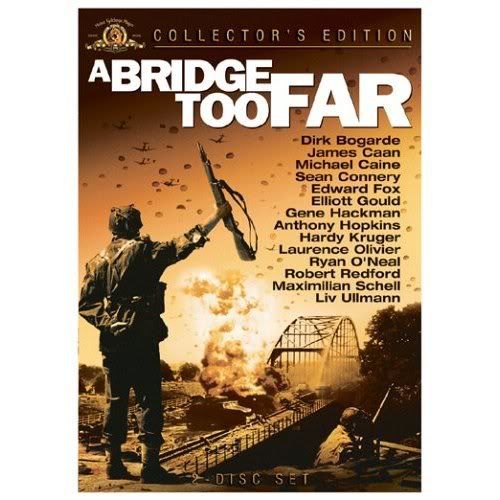
A Bridge Too Far


A fact-based retelling of Operation Market Garden, Richard Attenborough’s star-studded film suffers from its multiplicity of famous actors, and reminded this reviewer a little too much of Malick’s “Thin Red Line” (except Attenborough’s view of war does not match dead soldiers with injured birds). All in all, what was supposed to make this film a success instead ends up causing it to backfire, remaining a rather epic and mildly interesting re-enaction of the risky and dangerous WW2 operation.

Allied soldiers race to push through Operation Market Garden, which will cut off the Nazi movements into Holland; but as history has shown us, success was not to be, and the narrative presents viewpoints from various individuals at differing positions within the operation.

In terms of acting skill, reputation and calibre, it must be said that this film has the best of any ensemble piece. From Sean Connery to Robert Redford, Elliot Gould to Dirk Bogarde, and Laurence Olivier to Anthony Hopkins, this film is literally jam-packed with some of the best-known actors of recent times. However, whilst the actors do great jobs of portraying the men who were involved in this intricate military manouevre, they are simply too many in number to make individual impressions. Too many cooks is the most appropriate phrase. Michael Caine, Sean Connery and Anthony Hopkins are three of the army leaders who feature heavily here, all pressing to take the bridges of Holland in order to force the German offensive back. Dirk Bogarde, Laurence Olivier and Robert Redford appear in a smaller capacity, but each of them have important scenes, though Redford’s role appears a little tacked-on and cliched (an American soldier will try, against all odds, to save us foolish Brits?!). The sheer pedigree on display should light the film up, but Attenborough doesn’t get the best out of any, except perhaps Connery, who finally gets another role in which his Scottish brogue is not totally anachronistic. Some classic Brit and American actors shoehorn in cameos and supporting roles here, from Edward Fox to Elliot Gould and Ryan O’Neal. Famous actors in their own right, they don’t have much to work with and are, quite honestly, wasted here.

The one female character appears to be Liv Ullman’s Dutch housewife, and as this reviewer has absolutely no idea who she was or is, it seems appropriate to say that she really has to battle to make her role amount to something. Fortunately, she is given an opening narration, and also closes the film, and so her position as a woman amongst all these men gives the film its human aspects, as well as presenting the oft-forgotten fact that women suffer as much as men in war.

This is one of the better reconstructions of a WW2 scenario that I’ve seen, especially with it being made over twenty years ago. The action, locations and stunts are top-notch, and Attenborough reminds you constantly of why he is considered such a visionary director. Of particular note is the parachute drop of the soldiers sent in the first wave; quite how Attenborough managed to afford so many planes, extras and ambitious shots is beyond me, but it achieves the effect of throwing into what appears to be the real event. Richard Attenborough was well-known as an actor, but as a director his work does seem to attempt to transcend the medium (case in point: the marching scenes in Gandhi). This is film is no exception, with many scenes presenting the British director’s taste for realism. Within the realms of this particular movie, Attenborough’s attention to naturalism can be seen to be a result of his adaptation of the non-fiction book of the same name, and so the events and their depiction were always likely to be as spot-on as could be. And nevertheless, despite the actor issues, Attenborough presents his work as that of a director assured of his own vision, and as that of a man who seems determined to portray history as truly as possible.

The dialogue isn’t really something to pick up on; nevertheless, with the actors on display, and the plot based on real events, it can be said that most of what is said is fairly realistic. As you might expect from a war movie, the music is fairly bombastic but not so effective as to stick in the mind afterward. This area is where the film shines really. From blown bridges to tank attacks, and from paratroops landing in the thousands to man-to-man combat, the film features all forms of visual, and in all cases it is depicted realistically and vividly, in particular the bridge defence and attack at Arnhem.

The movie succeeds at what it doesn’t want to; being a perfect, dramatic historical re-enactment. In terms of an entertaining film, it fails, but Attenborough’s promise can be seen even here.

5/10

Pineapple Express


If you’re going to watch one comedy from 2008, make it this one. Weed, crazy violence and Seth Rogen combine to make “Pineapple Express” a unique and hilarious stoner comedy.

Dale (Rogen), a legal server, buys weed from Saul (Franco), who just wants to be his friend, but their sad lives are blown away when Dale witnesses a murder. With master-dealer Ted (Cole) after them, the stoners go on the run, trying to figure out what to do next in-between tokes.

Seth Rogen plays a little away from his comfort zone for once, but it is still largely the same performance. James Franco is the best thing here though, with Spider-Man just a distant memory. Rogen and Franco should take these characters on into a franchise, or failing that, work together again, because they’re hilarious together onscreen. Rogen is a nastier, less-kindly version of his slacker character here, and Franco is completely alien from anything I’ve ever seen him in before. They both manage to make their characters likeable yet pathetic, apt for two stoners.

Rosie Perez, as the corrupt policewoman cohort to Gary Cole’s Ted Jones, is barely in the film, but the character is really just a script excuse for a link to the police. Amber Heard, as Dale’s school-aged girlfriend, presents a girl who really should have chosen a better partner with a proportionate performance of embarrassment and innocence.

The rest of the cast is just as good, and Danny McBride will probably become the new Rogen after this and “Tropic Thunder”. McBride’s Red is a dealer above Saul, and is at turns a sissy stoner and a bad-ass, invincible ally to the two main stoners. He gets most of the best lines, and at times reminded me of the bizarre performances Will Ferrell gives in cameo roles like “Wedding Crashers”; he needs more time onscreen! Gary Cole is the bad guy, the dealer above Red, but does get given more than just this, as we see his obvious affection for weed too. His two hitmen, played by Craig Robinson and Kevin Corrigan, are the most dysfunctional pair of assassins ever; one always talking about getting home for his wife’s meal, and the other seemingly completely deranged and claiming he ’doesn’t need to use’ his gun. Again, like Franco and Rogen, these guys could star in a whole film and I’d watch it.

For an Apatow movie, this seems to be quite different in terms of its production and the violent, less-than-real view on the narrative. That doesn’t mean it’s bad – in fact, it makes a change. As a comedy, its dialogue is its strength, with some truly laugh-out-loud quotes to remember. David Gordon Green, previously known for being an indie director, makes a film here that allows him to jump into mainstream filmmaking whilst also still producing, in both wittiness of script and scarcity of setting, a film that has largely indie sensibilities.

The undoubted strength here, the dialogue from the first scene is the best part of the movie. Franco’s Saul gets most of the best lines, but McBride’s Red, along with the two hitmen, provide some memorable exchanges and conversations. There’s a Huey Lewis song on the soundtrack, so it’s almost like it’s harking back to the ‘80s. The use of real songs throughout gives it a bit of a boost, but it’s nothing special. The film has some great action scenes, and they’re ground in reality (as much as possible), as can be seen in the car chase scenes in particular. The other set-pieces are a mixture of hilarity and blood-spitting violence, which makes for a quite entertaining experience!

All in all, this is a funny film, far better than many others from this year or the last few. And you don't have to have smoked weed to enjoy it, I'm pretty sure of that.

8/10

City of God


Having been recommended to watch this film, I finally got around to it, and realise that the praise is appropriate: “City of God” is one of those outstanding movies that, being foreign, most people will never watch, but that should be seen: it's fantastic.

In Rio's "City of God", child and teen gangs run riot, paying off police and massacring each other for drugs and money. One young guy, Rocket, tells the story of how the gangs came to be, intertwining their stories with his own and other individuals to map out the trail of destruction, death and anarchy that surround their lives daily.

Most of the performances here, if not all, are by actors and actresses plucked from the slums that were the basis for the movie. Taking this into account, it’s astonishing how good the cast is, and how so many untrained and inexperienced kids can give such amazing portrayals of kids that aren’t so far removed from what they could have been. The actors who play Rocket (the narrator and protagonist) and Lil’ Ze (somewhat the antagonist throughout, despite not actually being after or against Rocket) are probably to be considered the stars here,and the two actors, untrained as were their castmates, present the confusion and anarchy that dictates the lives of youths in such regions. The menace and psychosis that Lil’ Ze exudes is disturbing, and you do get the idea that the young actor probably knew someone quite akin to his character.

In regards to supporting male actors, there are so many, it’s hard to even begin to put a number or an adequate review of them all. What the many young boys and teens provide in the film, as a group, is that idea of gang mentality and gang warfare. They have nothing else, these kids; no education, no chance of bettering themselves, and so they are inevitably drawn to gangs and violence, with bitter and deadly results. It is hard to remember at times that they are actors, and from the youngest (when you see one particularly disturbing scene, you’ll understand) to the oldest, the young men in this film are disturbingly natural.

The only woman that could be considered a star would be Alice Braga’s character, whom Rocket falls in love with. Being as she is the one actress to have made something of a career from this movie,(she has lately starred in "I Am Legend") she is noticeable and a key component of the narrative, a girl who has no idea what she has gotten into. As girls do not tend to ingratiate themselves into gang warfare, the women here are presented as anonymous or as eye-candy to the boys, but most hold their own in the narrative, and performance-wise, when they are onscreen the younger and older women are very good actresses.

Filmed in Rio, and in the very slums that the narrative is staged in, the film provides that little extra semblance of realism and danger, and the extreme poverty and lawlessness in which these kids have to live each day. The starkness of the city, and the natural vistas that are presented through the reality of the setting, combine with the Brazilian music and Portuguese speech to create a distinctly urbane viewing experience. Fernando Meireilles began his globally-recognised career with this film, and taking into account the attention and praise it received, the director should by rights be able to pick any project he wants. Taking street kids and allowing them to play skewed versions of themselves was a brave move, and it pays off amazingly well. For that decision, and for the idea to film within the very slums that the narrative suggests, the director deserves extra credit.

The problem with foreign films will always be that subtitles distract, and detract, from the narrative. Here however, you do a get a sense of the more weighted and important dialogues, which is testament to the actors and director. There is a lot of Brazilian samba, jazz and various localised music used, with only a small proportion of the soundtrack being an actual non-diagetic soundtrack. This helps to contribute to the idea that we are watching real life, and not a movie, reinforcing the reality of the settings (nightclubs, radios and such help to put this across also).

The film is visually outstanding, with the slums and favelas of Rio presented as a never-ending network of sprawling tunnels, shanty homes and roads, often filled with youths, guns, blood and death. The scene that bookends the film (that of a chicken running for freedom through the streets, pursued by gangs of kids) is probably the best indicator of the visual acumen the film presents; we never lose the chicken, and we run alongside it as well, seemingly through labyrinthe amounts of passages. The good and bad sides of Brazil are presented in all their clarity; beautiful beaches are compared with streets filled with dead and grimy hovels holding gun-wielding children waiting to ambush others.

If you're put off by foreign films, then don't watch this. If you've got an open mind, and an eye for a good narrative, then you must watch this film.

10/10 (I know, two in two days: what's going on?!)

Sunday, 16 November 2008

Hellboy 2: The Golden Army


Another of those rare examples where a sequel completely outdoes its predecessor (how many more can we get?), “Hellboy 2” appears onscreen as if Guillermo Del Toro had downloaded every monstrous image from his mind and projected it onto film. Visually, acting-wise and narratively speaking, this film marks among my favourites from 2008.

Ron Perlman IS Hellboy – it’s not even as if he could be in anything else now, as this is all I will see him as (unless Del Toro gives him an awesome role in the “Hobbit” films. Perlman gets way more screen time here (the absence of Rupert Jones’ Agent Myers is comically explained), and as a result we get a better viewpoint of the character’s personality – one hugely flawed and emotional monster, not at all sure of his place in the world. The actor manages to make Hellboy sympathetic and dangerous, and that’s one of the performance’s strengths.

Selma Blair is brilliant here, her character allowed to be herself at last in this narrative, and as such we see the best of the actress as her character struggles with her place in the world. As the only human in the BPRD, she allows for the audience to connect more with her struggles, and certain revelations throughout the plot allow for us to see that she is struggling with getting the balance between the human and the monster in herself. Anna Walton plays the twin sister of Goss’ Nuada, and the British actress presents the character’s confusion and dilemmas with an icy, yet innocent countenance.

Luke Goss, Doug Jones, Jeffrey Tambour and Seth McFarlane (yes, “Family Guy”‘s Stewie/Peter etc.) all give different yet significant elements to the film. Goss, as the antagonist Prince Nuada, presents the elf prince as a man who simply feels that the world is losing its touch with fantasy, and creates a sympathetic character that can’t really be seen as wholly evil. Jones gets to voice and act as Sapien this time around, and the gangly actor can be seen to be just as good at speaking as his freakish body is at portraying this bizarre characters (he also plays the disturbing Angel of Death here). Tambour takes a more leading role to replace John Hurt’s character here, and the comedy, whilst ramped up a notch, is counter-acted with a new position of antagonism towards Hellboy’s appearances in public. McFarlane voices Johann Krauss, a mechanical, eptoplasmic German who joins the team, and the “Family Guy” mastermind shows versatility of voice to portray the stuffy new ‘leader’ of the team; his scenes with Hellboy are among the film’s most hilarious.

If Del Toro made this film as an audition of sorts for “The Hobbit”, he couldn’t have really done any better. The film improves on the first on every level, and I personally think that this, alongside “Pan’s Labyrinth” mark Guillermo Del Toro as one of the best directors at this point in time. The narrative’s mythological bent, mixed with Hellboy’s growing angst about his position on earth, allow Del Toro to add more drama and emotive plot points, humanising the film and the characters somewhat. However, to counteract this, he adds monster upon monster and then proceeds to make the audience feel sympathetic towards them; a moral confusion that the director delights in presenting throughout. What could have been a stupid comic book movie ends up posing some interesting questions alongside a masterful action/comedy/thriller combination.

There are some zingers in the dialogue here, and the exposition is really nicely handled at the beginning of the film through an intriguing plot device (I can’t spoil it), which allows the rest of the film to go off the rails. The interactions between Hellboy, Tambour’s Manning and Krauss are the comedic highlights, and in some of the scenes with Goss and Perlman, you get the sense of conflict both feel about what is going on – who are the monsters? Are those we perceive as monsters not so? The soundtrack itself is again, sadly, anonymous, only really serving to back the film up. However, one scene utilises a Barry Manilow song to hilarious, brilliant results, and this one point in the film will stick in the mind for a while afterward – Manilow should ask them for royalties!

The film is outstanding visually, and it's likely that you will actually not see anything as amazing or as vibrant this year onscreen. From the imperious BPRD hideout to the grotty streets of Manhattan, the film is realistic in its depiction of the real world. When it shows the underworld of fantasy, fairytale and magic (amusingly below the Brooklyn Bridge), you will be astounded. The Troll Market that the BPRD agents visit has been compared to the Cantina scene in “Star Wars: A New Hope”, and it is just like that: monsters as far as the eye can see, all presented onscreen in their bizarre glory. This, along with the storage area for the eponymous Golden Army, is an indication of the visual flair Del Toro and his effects supervisors have created, and along with the fantastic CGI (in some places flawless), you can only hope that “The Hobbit” will be just as good, if not better.

Topping "Hellboy" and many, many other comic book films I've sat through the last few years, "The Golden Army" is totally worth two hours of your time, and here's hoping that one day Del Toro gets round to making a third; if the improvement on show here is anything to go by, the next one will need to be almost impossibly good!

10/10

Hellboy


A new, brasher take on superheroes begins with Big Red. Guillermo Del Toro masterminds a film chock-full of sardonic humour, Lovecraftian horror and those old movie favs the Nazis.

Hellboy (Perlman) is a demon brought through a portal by the Nazis, and who grows up to be humanity's weapon against the supernatural and bizarre. Coupled with pyrokinetic Liz Sherman (Blair) and fish-man Abe Sapien (Jones/Hyde Pierce), the big red guy goes after those pesky Nazis, who crop up again in an attempt to unleash tentacled gods onto Earth's unsuspecting citizens.

Ron Perlman plays Hellboy, and the anthropomorphic demon is probably one of the most entertaining superheroes around. Perlman manages to get across a great performance through his prosthetics and make-up, and this only serves to accentuate the quality of his performance, like a modern day Lon Chaney. Rupert Evans can probably be considered the second lead actor, his Agent Myers the audience’s onscreen representative, playing bemused and confused quite well for a first-time actor.

Selma Blair plays Liz, a pyrokinetic love interest to Hellboy, and as her character is mostly shut away and sheltered for most of the film, her performance is reflective. I almost wish she had been allowed to be more creative with her performance, as the character appears completely staid at times, but the actress is still miles better than many others that would take the role.

Doug Jones plays and David Hyde Pierce (Niles from “Fraiser”) act and voice Abe Sapien respectively, the bizarre man-fish a witty comic foil to Hellboy’s brash character. John Hurt takes the stock father figure/benevolent old man/advisor role here, and the British actor does it with some class as well as humour. Jeffrey Tambour is the FBI spokesman who wants the department shut, and the American actor is comedically perfect here, as his stuffy and pompous attitude completely wilts in Hellboy’s presence.

Guillermo Del Toro gets to showcase a little of his love for all things monster, and he directs a film that’s part comedy, part supernatural horror and part romance with able hands. The music is anonymous, normal movie fare, but visually it is stunning. The newly announced director of the “Hobbit” films presents a small hint at the visual genius he possesses with “Hellboy”, as well as his handle on humour and mythology. Hellboy is a sympathetic, unconventional superhero, and so the viewer is able to have more of a laugh than most comic-book films (cough DARK KNIGHT cough) allow. Fight scenes and dramatic scenes are handled with balanced skill, and Del Toro followed this up with “Pan’s Labyrinth”, another fantasy-based superhit. What this director can do wrong, I don’t know!

Some classic lines are heard, mostly from Hellboy, but there is a lot of exposition to deliver in this movie, and fortunately most of it is easy to deal with. Musically, this was totally standard action movie fare, and as such, it’s simply backing for the images, nothing more stirring or memorable to be heard. From Hellboy himself (a mastery of acting from Perlman and a whole body prosthetic!), and onto the clockwork Nazi, the film visually depicts supernatural creatures in a strangely tangible way, and the special effects are good for 2004 (which is bizarre to say only four years later).

All in all, the film serves as a reminder that fantasy and superheroes can be a little unconventional in execution, and yet be more entertaining as a result.

8/10

Wednesday, 5 November 2008

Street Kings


A bruising and noir-infused view of contemporary L.A. cops, "Street Kings" is like "L.A. Confidential" but in the modern day and with Keanu Reeves, and it's not a patch on "Confidential" but is still an entertaining movie.

Tom Ludlow (Reeves) is a top cop in L.A.'s police department, but 'cleans up' dirty situations that are kept quiet by his unit, particularly his superior Wander (Whitaker). However, Ludlow's career takes a turn for the worse as he's framed for the murder of another cop, and he has to confront the mixture of antagonism and apathy amongst his unit and other cops to try to find the real killers, as well as discover who framed him.

Keanu Reeves can be the star of a film; we all know that. But here it's like it's the first movie he's ever starred in, and you find yourself wondering why he's been held in such esteem as an actor! His character Tom Ludlow is a disassociated and anti-social freak though, so I'm guessing that he's tailored the performance a little that way. Still, it isn't his best role. Forest Whitaker is great though. The man sounds like Denzel here, and his chief cop character Wander exudes control and a sense of his own self-satisfaction throughout, shades of Idi Amin coming through in Whitaker's performance.

The two women in the film, Naomi Harris (best known from "28 Days Later" and "Pirates of the Carribean") and Martha Higareda are side characters. Nothing more is given to them to do like Kim Basinger had in "Confidential", and this takes away from their placing in the film. But then the story does focus on the men, and so this is probably a good indication of why they are sidelined for most of the narrative

Hugh Laurie leads the pack with Chris Evans in terms of supporting actors, the British actor in particular adding a bit of class to the proceedings as an internal affairs chief after Reeves' character. Evans plays an ally of Ludlow, and the young American actor does a little to erase the horrors of "Fantastic Four" here. Terry Crews ably presents himself as the character on which the narrative swings, his former friend to Reeves' Ludlow an antagonistic fellow cop. The rappers mentioned above provide roles of the street guys that the cops either go after or work with, and as they've pretty much been pushed into these roles, the two (Common and The Game) do alright with what they're given.

David Ayer presents L.A. and its cops as harsh, gritty and distinctly urbane, as opposed to other crime films that make it clear the cops are not at all integrated into their city. As such, the film is ably directed, and the director seems very familiar with the city at large; one of the directors who seems most capable of presenting it as accurately. With James Ellroy as the writer, "Street Kings" was onto a winner before it went into production, and merging both Ayers and his visions of Los Angeles was a masterstroke. They'll destroy your faith in L.A. cops, sure, but their conversations, slang and the way that the plot so meticulously unravels are Ellroy at his best, and the film is the better for his input.


The music was almost like blaring horns throughout; perhaps reflecting the characters and their perceived treachery at all turns. Whilst not really a functional soundtrack as such, the music (as it is) does background the action quite well throughout, though it's nothing special. L.A. in all its gritty, conurbation goodness is cleanly and slickly presented here by Ayer, and with his previous two films being set in the same city dealing with cops, he must be quite familiar with the environment, as the city becomes a part of the movie's intricacies in plot, jumping from location to location. The gunfights are quick, authentic and violent, and as such appear more realistic than in many other crime movies.

All in all, "Street Kings" is no patch on "L.A. Confidential", but as a screenplay, it was never going to top that. Reeves is convincing enough if not the most competent actor in the world, but it's still an entertaining crime film to watch.

7/10

Tuesday, 4 November 2008

Quantum of Solace


Taking on right from where "Casino Royale" left off, "Quantum of Solace" brings more of the same to the Bond franchise, an original story with a new and interesting director which manages to entertain and remain as such throughout.

James Bond (Craig) has captured Mr. White, who he feels can lead him to the organisation behind the conspiracy encountered in “Casino Royale”, and the people who manipulated Vesper. With M (Dench) after him, Bond teams with Camille (Kurylenko) to take down the mysterious Dominic Greene (Amalric) who appears to be a front for the organisation.

Daniel Craig is now my second favourite Bond, just behind Connery. And on this performance, I can't wait to see another Craig as Bond movie. Craig's Bond, so acclaimed after "Royale", goes another step in his quest for retribution and answers, and Craig portrays the famous spy as Fleming intended; closer than any other actor but Connery, Craig presents a mix of cold, ruthless and witty that only the Scot had attained before, and being as this is a reboot, not only is Craig harsher, colder and more bad-ass than previous Bonds Dalton and Brosnan, but more physical and brutal. Amalric presents his shady entrepeneur Dominic Greene as a shark-like character, as the man is clearly angling for something when we first meet him, and his callous regard for others doesn't bode well for the presentation of more members of his organisation in later films. There is no bleeding eye, nor third nipple, but Greene is all menace and hidden evil; a real-world villain for Bond to tackle for once.

Judi Dench gives Craig's Bond a mix of motherly retribution and stern rebukes throughout, but the famous actress, in her sixth performance as M, features far more this time, and as such the character's coldness and empathy for her agent are embellished. Olga Kurylenko is Bond's ally Camille; damaged goods like Bond, and in the process of gaining revenge on someone who killed those she loved, like Bond. As an equal and someone the spy can bond with over their shared pain, Camille is a character unlike many Bond girls before, and as such, Kurylenko has to try harder to present herself seriously. The actress succeeds though, and her battered but strong performance is a welcome entrance to a franchise that all too often paints women as spoilt, easily seduced and weak-willed. Gemma Arterton brings some of the old Bond spirit to the new films with her Agent Fields, an MI6 agent tasked with sending Bond home, and as with many women before her (in literary and film terms), she submits to 007's charms. However, Arterton plays her as more than equal to Craig's Bond.

Giancarlo Gianni, as the traitorous Rene Mathis, brings an interesting performance to the film. The Italian actor presents his spy character as seeking retribution from Bond, and as such feels he must help the British spy in his quest. Jeffrey Wright's Felix Leiter is a laconic and stern man who sees many problems with what he's being asked to do, and is a perfect ally to the blunt and angry Bond. Hopefully Leiter should be back in the third movie, as Jeffrey Wright's performances present a cool character who could be interesting in alliance with Bond. General Medrano, the film's other villain, is an archetypal military antagonist, who sees his chance to better his standing and take over Bolivia, with Greene's slippery self supporting his coup. Joaquin Cosio plays the menacing Medrano with great gusto; here's a man who you would not cross, and his actions in the film make him particularly unsympathetic.

Marc Forster, previously known for "The Kite Runner" and "Finding Neverland" was not many people's ideal Bond film director, but the Swiss shows here that not only can he move between genres, but that his handle of dramatic scenes is as good as before. The film never seems to let up with its action, and yet somehow Forster manages to balance it out with character encounters that are more than equal, or even in conjunction (Bond and Leiter's meeting is one such example). Hopefully Forster can take the success here and get more projects, with more of a mixture now he can be seen to be adept at action.

The dialogue is, like much of the film, not the same as the old Bond. And in this modern world, it shouldn't be. There are however many comedic aspects, and some great one-liners. Paul Haggis (writer and director of "Crash") brings a touch of characterisation to the proceedings with his non-comedic writing; all too often does the pain of what Bond has gone through get brought back to his mind and others, and Haggis' introspective focus on Bond gives him a more human side for once.

Jack White and Alicia Keys should never, ever sing together again. That's my general consensus on the theme song. However, David Arnold repairs the damage caused by "Another Way To Die" with his score, which combines action and dramatic elements with a diversity of instruments (for each new locale, the music reflects the culture), as well as a mixture of electronic and orchestral elements.

The film is best visually, like so many films from 2008 (and dare I say it, but could next year be even better?). From the opening scene, we are treated to almost non-stop action, and it's amazingly good without many semblances of CGI thankfully. More than that, it's bruising, and the knowledge that accidents happened and Craig suffered many injuries suggest that they went far enough to present realistic action. The cityscapes throughout are really the cities mentioned too, giving each locale an authentic feel when Bond legs it round them.

It’s interesting to think that it’s mere years ago we were treated to the farce that was “Die Another Day”, and thank god for Daniel Craig, because with “Quantum of Solace”, he has another film that shows a better, more ruthless Bond, as the character should be.

9/10

Tuesday, 28 October 2008

Burn After Reading


After the Oscar-winning success of their last film ‘No Country For Old Men’, Joel and Ethan Coen effectively could have just stopped, taken a breather, and enjoyed glancing at the lil’ golden men on their mantelpiece for a few years. But here again we have a star-packed Coen Brothers movie, and in terms of comparison to ‘No Country...’, ‘Burn After Reading’ continues the trend of dark, madcap comedies from the writing and directing siblings, and once again, their quirkiness, with a little help from Messers Pitt, Clooney and Malkovich, creates a quite crazy little movie.

Oswald Cox (Malkovich) works for the C.I.A. as an analyst – not a high-profile job there, but one that nevertheless he is angered to be demoted from. Furious at the agency, he writes his memoirs, whilst unbeknownst to him, his ice-cold wife (Swinton) fools around with sleazeball Harry Pfarrer (Clooney, an unhappily married and promiscuous Treasury agent. Gym trainer Linda Litzke (McDormand), who wants to drastically change her appearance, and her colleague, the idiotic Chad Feldheimer (Pitt), discover a disc which serves as a catalyst for the five to come into contact with each other, and what’s on the disc is nowhere near as important as the chaos that ensues...

Mere months after ‘No Country...’, the Coens have managed to rustle up some of the best actors out there (and some friends from previous flicks) to make what can best be described as a dark comedy. Trust me in saying that watching this movie, you may find sympathy for the mere minimum of one character. It’s that simple; every character in the film is utterly pathetic in one way or another, and as a result, it makes the madness that unfolds that much more hilarious to watch, because there is simply no empathy you feel for these people.

Clooney, Malkovich and McDormand have the majority of screen-time, and Malkovich’s short-fuse insanity is used to great effect throughout. Clooney plays a parody of the public perception of himself in Pfarrer - a man who is always in need of women, and sex, played by one of the acting world’s most notorious bachelors. McDormand and Swinton are the two women presented here, and as with most Coen movies (‘Fargo’ in particular, which also starred McDormand), Litzke is a complete kook, causing massive ripples in search of a pathetic reward.

Support-wise, Brad Pitt dominates. He’s not so much stretching his acting talents as playing an idiot and getting paid for it, and his character Chad is one of the highlights of the movie. Everything he says is totally moronic, and his actions throughout his and Linda’s machinations are so ridiculous they serve as further hilarity (a sequence with a phone call, followed by a meeting with another character embodies this idiocy). J.K. Simmons (or Juno’s dad to many) manages to almost steal it away in an appearance as a C.I.A. boss who is totally mystified by the events going on around the agency with this disparate group of people, and he serves to embody us, the viewers, in his total bemusement at their antics. Swinton seems to keep getting these heartless, icy women roles, but she plays them so well that she may as well keep it up.

The film is not without fault: I enjoy many Coen films, but they require a certain sense of humour, and I don’t want to encourage people to see a film that they may not find at all funny. It’s also very short, and this, along with the all-too serious little scenes along the way (it is dark comedy after all, not all laughs), does make it quite a disjointed and perhaps rushed effort. And Simmons’ character, at the halfway point of the movie, orders his colleague to ‘report back to me when it all makes sense’ - a sentiment that some will find in the complexities of the plot (though only some). Regardless, it’s suitably mad enough for any person looking for a good laugh, and for fans of the Coen Brothers, it’s a must-see addition to their filmography.

8/10

(again, this may appear in the student paper, so fingers crossed!)

Saturday, 25 October 2008

Wanted


Twisted, crazy-fast bedlam mixed with the desire to lift yourself up from a boring life, 'Wanted' takes the rags-to-riches hero cliche and delivers it a roundhouse kick followed by a penetrating bullet to the brain. Calling the movie insane doesn't begin to cover it; it's KERAZY.

Wesley Gibson (James McAvoy) leads a pathetic life that he wishes to escape, and by chance, the death of a seemingly anonymous man atop a building is the catalyst for his life to completely change tack, as assassins Fox and Sloane (Angelina Jolie and Morgan Freeman) induct him into the Fraternity, a group of killers who try to cleanse the world of those they deem it be rid of. However, a rogue assassin, Cross (Thomas Kretschmann), targets Wesley, and he tries to make sense of the crazy direction his life has taken without losing control along the way.

McAvoy has come a long, long way since his British TV days, and the actor carries off American, whiny and pathetic Wesley just as well as he portrays adrenaline-fuelled, Jolie-snogging Wesley. This is going to open doors for him, and hopefully more roles like 'Last King of Scotland' as well as 'Wanted' will come along as a result of his performance here. Morgan Freeman plays a slight variation on his mentor role, which is actually refreshing, particularly when his character swears, something that you'd never think Freeman would do, and indicative of the movie's ambition to mess with your head.

Jolie simply has to glare in this movie and you can sense a million men swooning. Though that's not to say she's there for her looks, as her ice-queen demeanour and waif-like appearance are perfectly matched for her character. Fox is an emotionless assassin, and Jolie plays it as such. She's not even in the film that much, but she does fine with the scenes she plays out, though it's clear to see it wasn't exactly a challenge. As with so many action films, there is Jolie and then no-one else feminine that stands out. Wesley's cheating girlfriend, along with his domineering boss are the only two female co-stars, and to be honest anyone could have played them and it wouldn't make a difference. They're anonymous characters that portray the facelessness of Wesley's old life, and the actresses do what they need to do.

The criminally under-appreciated Thomas Kretschmann ('King Kong', 'Downfall', 'The Pianist') plays Cross, the antagonist throughout, and he doesn't have anything to say, but the actor manages to present this cold, ruthless assassin just through expression (I may be biased, but he's a quality actor, and so he deserves the coverage even for this role). Terence Stamp and Common (never thought I'd mention the two in the same sentence) play variations on gunsmiths, and Stamp delivers exposition whilst Common presents the assassin's creed, along with Brit actor Marc Warren, as a bunch of soulless guns-for-hire; it's not a stretch for them.

Timur Bekmambetov moves from his mad-cap 'Watch' trilogy to Hollywood action, and the Eastern-European's propensity for the most ridiculous stunts (please watch 'Night Watch' for a visual comparison to what I'm saying here, you'll understand) is carried over seamlessly to the U.S. I only hope he gets more work, as the film presents some of the most insane visuals I've ever seen (real or not).

Taking the bare bones of Mark Millar's 'Wanted' comics, Bekmambetov doesn't so much direct as allow everything to go off onscreen, and whilst sometimes this may be problematic, other times it really pays off. Despite the massive amount of action, the director manages to present the conflicts Wesley encounters quite well, and personalise the characters enough to show he is not all explosions and blood. McAvoy is the only character that really gets a personality though, which I guess is the point, but this does detract (as said above) from the other performances.

Much of what is said that is worth remembering is laced with profanity and humour, and these stretches are where the dialogue is best. Wesley's final line is brilliant, as is most of his sardonic and laconic voiceover. The exposition of the Fraternity's aims and workings is brief, but at least manages to convey its ridiculous nature. The film's use of songs is better than the soundtrack, which is basically your expected action film soundtrack (by perennial hack composer Danny Elfman no less). Nine Inch Nails' 'Every Day Is Exactly The Same' is apt to Wesley's story, and welcome exposure for an underachieving band. Use of the 'Pina Colada' song is the only other instance in which the music was entertaining however.

Like so many of the new wave of action films, the visuals are where 'Wanted' completely wins out. The CGI used in the film is obviously CGI, but it's excellent in context. When you've seen what happens with a Dodge Viper and a bus, and then later a passenger train and a ravine, it's evident that 'Wanted' doesn't give a damn what's real and what's not; it cares only about going over the top, and it totally achieves that. The anonymous American city conveys the nowhere-land Wesley has inhabited, and the move to Prague later in the story allows Bekmambetov to present the contrast with Eastern Europe, the duality of the Fraternity's headquarters in both the U.S. and Europe a good example.

The film is totally insane on every level, and what lets it down is the disinterest with which the actors play their characters. However, this is the only problem I had with this film, and any person can enjoy it, as long as their brain is firmly switched to 'OFF' or 'UP FOR ANYTHING', because no thought is required here.

8/10

Sunday, 19 October 2008

John Rambo


Far better than it ever should have been, the eponymously-titled "John Rambo" or "Rambo 4" to everyone else other than Sly, is balls-to-the-wall, eviscerating and most importantly brainless fun.

In deepest Thailand, near the Burmese border and area of conflict, John Rambo (Stallone) lives a life of peace and tranquillity, trying to forget his past as a highly-trained soldier whose life unravelled after the Vietnam War. However, his past life is brought into focus after a group of Christian missionaries get captured up river, having asked him to take them into Burma, and the embittered veteran sees his chance to do some good and save lives one more time.

Sylvester Stallone writes, directs and stars in the second revisit of his old classics (the first being "Rocky Balboa") and despite his poor choices throughout the '90s ("Daylight", "Demolition Man" and "Driven" were diabolically dreadful if harmless films) he shows he's capable of revisiting the acting skill that was shown so promisingly in "First Blood" and "Rocky" back in the day, though a sensible self-editing of his own dialogue levels presents the all-too clear idea that the man knows he’s not good at speaking much on film.

Julie Benz is probably the female 'star' of the film, being but a hint of a love interest for ol' Johnny, and the actress does well in what little time she has onscreen (which is more than most, but no-one seems to hold the screen here but Stallone). She also plays damsel-in-distress and needy Christian as well as can be expected, but is nothing special.

I really liked the male supporting cast here, if only because they are both the predominant gender presented in the movie, and because there are some great little performances as well. The leader of the mercenaries is a foul-mouthed British guy played by an ACTUAL British actor, which from a British point of view is brilliant for two reasons: he's not an American playing a Brit, and he's not the bad guy. Same goes for some of the other mercenaries; not every Brit has to be an enemy! The leader of the Burmese soldiers is disgusting, the character a stereotypical evil leader with a particularly horrific penchant for young boys, just in case you didn't hate him enough already. I guess though that this actually makes the performance that much better though.

Filmed near to where the real atrocities are occuring, the film, until the latter stages, is a surprisingly level-headed presentation of the horror present in Burma, and Stallone fools you into thinking that he's aimed for a politically-oriented, serious movie. As it is, when Rambo strikes back, the film becomes that much more insane, and it's presented fantastically by Stallone, who really knows how to shoot action, and could become quite the director in years to come. “John Rambo” and "Rocky Balboa" have not only reinvigorated their respective franchises but remind us how the man is not just muscles and lisp, but quite the action star and action director. I was genuinely taken aback by how good the film was, location-wise, action-wise and the serious nature of the plot. Here's hoping Stallone can get some more directing jobs (not necessarily to star, but as a director he could totally reinvent himself).

The dialogue here however is rubbish, as you'd expect unfortunately. The opening narration is sensible and fact-based, but afterward much of it is variations on 'I don't wanna fight', much, MUCH profanity from the Brit mercs, and missionary shtick. The film's so much better when it's action that you come to dread watching the dialogue-heavy scenes. Jerry Goldsmith's awesome theme is present, and to me that shows that Stallone knew he needed to remind people of what made the other films so popular, bringing the music in and allowing the film to enjoy the spirit of the previous three movies. Visually speaking, Stallone excels, the lush jungles and harsh weather of Southern Asia a far better setting than any studio could be. The action, as shot, is fantastic, and the gore that goes with it is probably more realistic than many people would want to admit, but this is a strength, and is pulled off with style in the insane final act.

Nowhere near the seriousness that "First Blood" aimed for, "Rambo" nevertheless manages to tackle a fairly political situation in Burma with a semblance of seriousness and sensitivity, despite the ridiculous conclusion to the movie. Hopefully Stallone can build on the film’s strengths and make a career out of his direction; if not, this will be remembered as the film in which Sly showed us he can still do it; act, direct, and most importantly of all: blow sh*t up.

7/10